Toronto winters do not forgive neglected balconies. With nearly 62 freeze-thaw cycles recorded per year in the city, exposed concrete takes a beating that most people underestimate. For property managers overseeing condo buildings and mid-rise residential towers across the GTA, balcony restoration is not a cosmetic concern. It is a structural and safety issue that gets more expensive the longer it waits.
This guide covers what causes balcony deterioration, what warning signs to look for, what the repair process actually involves, and how to plan a balcony restoration project that protects your building and your budget.
Why Toronto Balconies Deteriorate Faster Than You Think
Concrete looks permanent. It is not. Water is the main reason balconies fail in this climate. When moisture seeps into small pores in a concrete slab and then freezes, it expands by roughly 9 percent. That internal pressure cracks the surface from within. Repeat that cycle 62 times a year across 10 or 20 winters and you have serious structural deterioration.
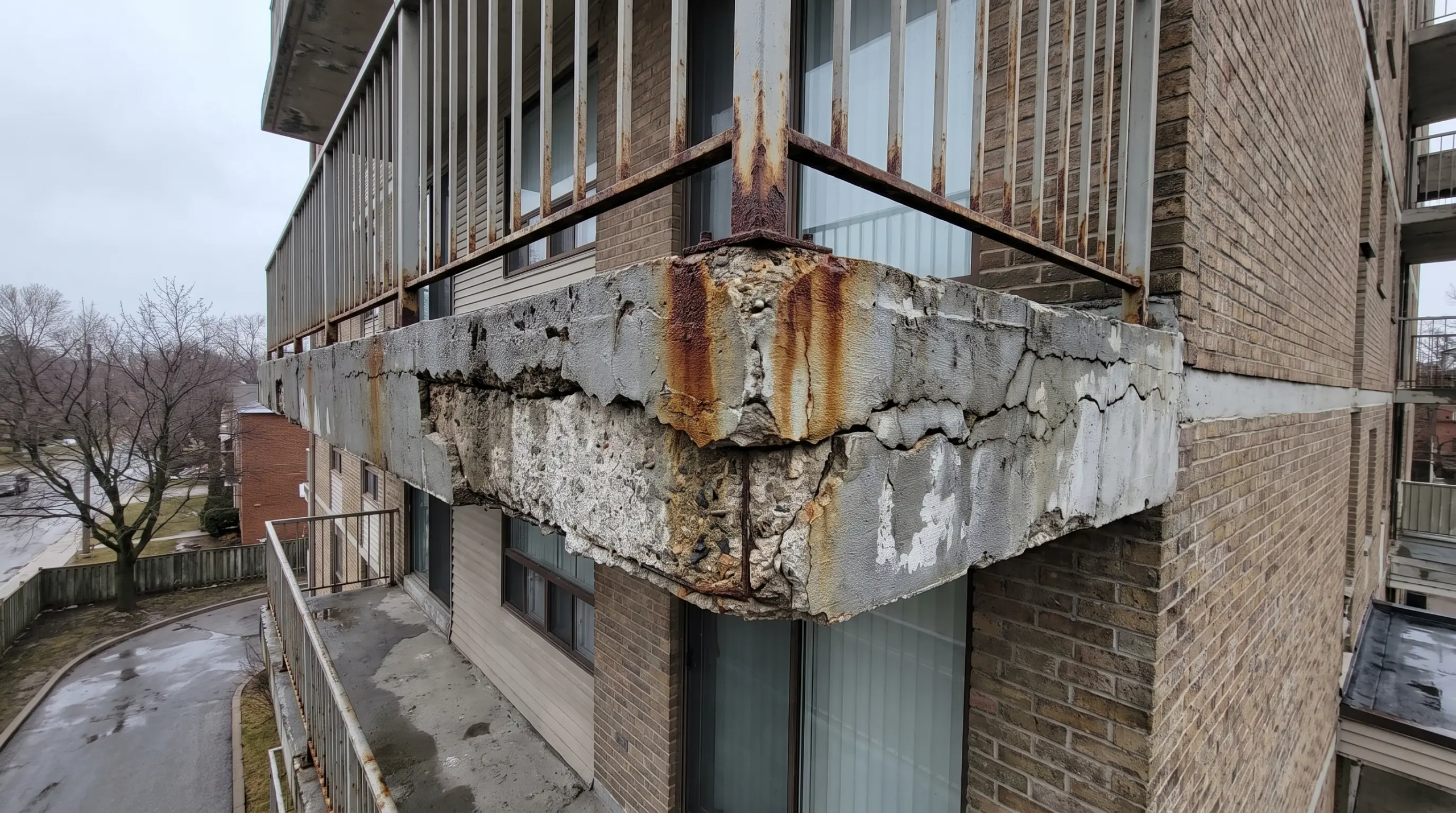
The problem gets worse when rebar is involved. Concrete reinforcing steel sits inside the slab to give it strength, but when water reaches it through cracks or failed waterproofing, the rebar begins to corrode. Rust expands. When rebar corrodes, it can expand up to 700 percent its original volume, which forces the surrounding concrete apart from the inside. This is the spalling you see on older buildings, chunks of concrete breaking away from the slab surface, sometimes falling.
De-icing salts make it worse. Residents using salt on their balconies during winter are accelerating chemical deterioration in the concrete. Salt draws moisture in and attacks the cement paste that holds everything together.
Warning Signs Every Property Manager Should Know
Catching problems early is the difference between a manageable repair budget and a major structural program. Walk your building’s balconies regularly and look for these:
Spalling and flaking concrete. If you see concrete chips, loose aggregate, or rough broken surfaces on balcony slabs, deterioration is already underway. Surface spalling is early stage. When you can see rebar, it is well past early stage.
Rust stains. Orange-brown staining on slab surfaces or near railing bases almost always means corroding steel underneath. If the staining is near slab edges, cracks, or railing anchor points, get a professional inspection immediately.
Cracks. Not all cracks are equal. Hairline surface cracks are common and manageable. Wider cracks, cracks near slab edges, and cracks that allow water to collect are serious. Any crack that has grown since the last inspection needs attention.
Hollow sound when tapped. A solid concrete slab sounds dense when struck. A hollow or drum-like sound means delamination, the concrete layers have separated internally. That section of slab is no longer structurally sound.
Water leaking into units below. Failed balcony waterproofing is one of the most common sources of water damage inside condo units. If residents on lower floors are reporting ceiling leaks or damp walls, a balcony above is usually the first place to investigate.
Standing water. Balconies should drain cleanly. Pooling water means drainage has failed or the slab has shifted. Standing water accelerates every other form of deterioration on the list.
What Balcony Restoration Actually Involves
A proper balcony restoration is not a patch job. It follows a specific sequence that addresses both the damaged material and the root cause of the damage.
The first step is inspection. A qualified restoration team assesses the slab topside, soffit underside, slab edges, and railing anchorages using sounding and moisture meters. They map the damage before any repair decisions are made.
Surface preparation follows. Damaged concrete is saw-cut to clean boundaries and removed back to sound substrate. This matters because patching over compromised concrete does not hold.
Exposed rebar is then cleaned of rust using mechanical tools and wire brushing. Heavily corroded bars may need replacement. A corrosion-inhibiting primer is applied to all treated steel before any concrete repair goes on top.
Concrete repair uses polymer-modified mortars engineered specifically for structural restoration. These materials bond chemically with the existing substrate and are matched for strength, flexibility, and freeze-thaw resistance.
Waterproofing is the final and often most important step. A membrane is applied across the full balcony floor surface. This is what prevents water from reaching the repaired slab and the rebar inside it. Without proper waterproofing, the repair will fail again within a few years.
For high-rise buildings, certified swing stages or boom lifts are required for safe access. This is a compliance requirement under the Ministry of Labour and should be confirmed with any contractor before work begins.
Planning a Balcony Restoration Project
Property managers rarely deal with a single balcony. When one balcony in a building shows significant deterioration, others at the same level of age and exposure are usually close behind. A building-wide assessment gives condo boards the full picture before committing to a repair scope.
The timing of balcony work matters in Ontario. Concrete repair and waterproofing require surface and air temperatures above 5 degrees Celsius for proper curing. The practical window for exterior concrete work in Toronto runs roughly from late April through October.
Coordinating with residents is part of the job. A well-managed restoration program includes phased scheduling so not all balconies are under repair at once, written notices to residents about access restrictions, and clear timelines from the contractor.
Reserve fund planning should account for balcony restoration as a major cyclical cost. Buildings that put off balcony work typically face compressed timelines and higher costs when the repairs can no longer wait. Getting ahead of the schedule is consistently less expensive than reacting to structural failures.
How to Choose a Balcony Restoration Contractor in Toronto
Not every contractor who offers balcony repair is equipped to handle the structural scope that most GTA condo buildings require. When evaluating contractors, confirm they carry WSIB coverage and sufficient liability insurance. Ask for proof that their workers are trained for swing stage operations if your building requires high-rise access.
Ask for references from comparable projects, specifically other condo or mid-rise buildings, not residential homes. The access requirements, coordination demands, and material specifications for multi-unit buildings are different from single-family work.
Get the scope in writing before any work starts, including which repair methods will be used, what waterproofing system is specified, and what warranty covers both labour and materials.
At Imperial Restoration, we have been working with property managers and condo boards across the GTA since 2005. Balcony restoration is one of our core services. We provide building-wide assessments, detailed repair scopes, and complete restoration programs that address concrete, waterproofing, railings, and drainage in a single coordinated project.
If you are seeing the warning signs described above, contact us for a professional inspection before the next winter season.
Phone: (647) 621-2429
Website: imperial-restoration.ca
Serving Toronto, North York, Scarborough, Mississauga, Brampton, Vaughan, Markham and all GTA areas.
Frequently Asked Questions
How do I know if my building needs balcony restoration or just minor repairs?
The difference usually comes down to how deep the damage goes. Surface spalling and hairline cracks can often be addressed with localized patching and waterproofing. Once you have rebar exposure, delamination, or water infiltrating units below, you are looking at full restoration work. A professional sounding and moisture assessment will give you a clear answer before you commit to a scope.
How long does balcony restoration take?
A single balcony repair typically takes one to three days depending on the extent of damage and drying times. A building-wide program is phased over several weeks or months depending on the number of units and access requirements. A good contractor will give you a phased schedule before work starts.
Can balcony restoration be done in winter?
Concrete repair and waterproofing require temperatures above 5 degrees Celsius for curing. In Toronto, exterior concrete work is not recommended from November through March. If you have urgent structural safety issues in winter, temporary protection measures can be put in place until proper repairs can be completed in spring.
Who is responsible for balcony repairs in a condo building?
Responsibility depends on the condo corporation’s declaration. In most Ontario buildings, the balcony slab and structural components are treated as common elements or exclusive-use common elements, which means the condo corporation is responsible for maintenance and repair. Individual unit owners typically handle non-structural finishes. Confirm the specifics with your building’s declaration and legal counsel.
How much does balcony restoration cost in Toronto?
Costs vary significantly based on damage severity, building height, access requirements, and the number of balconies involved. Minor surface patching on a single balcony can run from $800 to $2,500. Moderate repair with waterproofing typically ranges from $3,000 to $7,000 per balcony. Severe structural repair with full membrane waterproofing can reach $8,000 to $20,000 or more. Building-wide programs are quoted on a per-project basis after a full inspection.