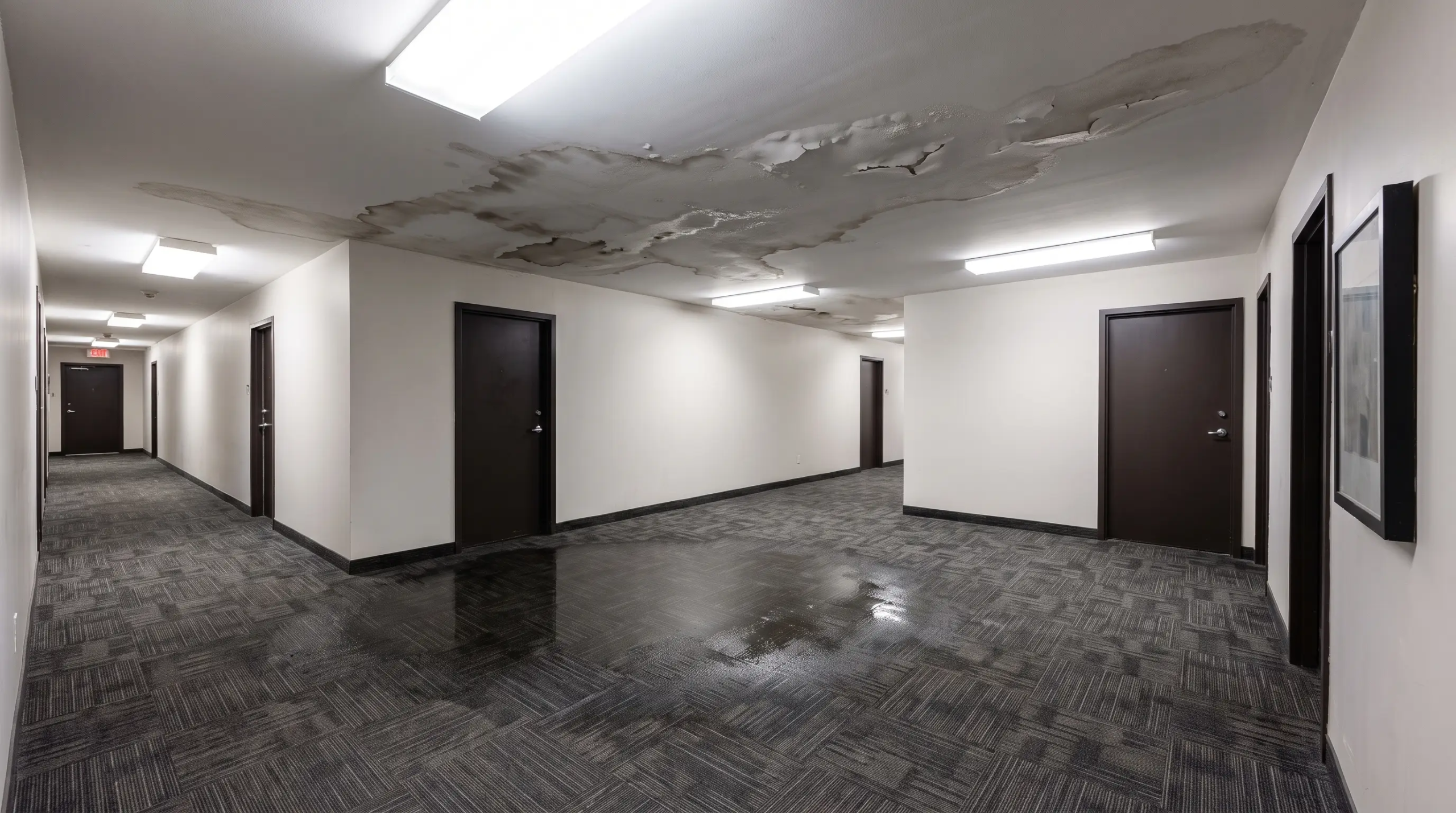
A burst pipe at 2am. A roof leak discovered on a Monday morning. A washing machine supply line failure in a unit three floors above yours. Water damage in a condo building does not announce itself politely. It spreads fast, moves through floors and walls, and turns into a much larger problem the longer it goes without proper attention.
For property managers across the GTA, the first 24 hours after water damage is discovered are the most important. What you do in that window determines whether you contain a manageable incident or spend the next several weeks dealing with mold, structural damage, and insurance disputes across multiple units.
This guide covers exactly what to do, in what order, and why the timeline matters.
Why the First 24 Hours Are Critical
Water does not stay where it falls. In a condo building, a leak from one unit can travel through concrete slabs, wall assemblies, and mechanical chases into units one, two, or three floors below before anyone notices. By the time visible damage appears on a ceiling, water has already been sitting inside wall cavities and subfloors for hours.
Mold becomes a real risk within 24 to 48 hours of water exposure, particularly in areas with poor ventilation. Once mold is established, remediation costs go up significantly and the restoration scope expands beyond the original water damage. That is a problem that proper emergency response prevents entirely.
The cost of water damage restoration in Toronto ranges from roughly $3 to $10 per square foot depending on severity and contamination level. Acting fast keeps you on the lower end of that range. Waiting pushes costs higher and complicates insurance claims for everyone involved.
Step 1: Find the Source and Stop It
The first priority is identifying where the water is coming from and stopping it. This sounds straightforward but in a multi-unit building it often is not. The visible damage may be two or three floors below the actual source.
If the leak is from a unit’s plumbing, shut off the supply line to that unit. If it involves the building’s main systems, your superintendent needs to isolate the affected section. If the source is external, a roof or window failure during a storm, you may only be able to limit the water entry with temporary protection until conditions allow for proper assessment.
Do not skip this step or deprioritize it. Everything else depends on the source being stopped. Restoration cannot begin properly while water is still entering the building.
Step 2: Document Everything Before Cleanup Starts
Before any cleanup begins, document the damage thoroughly. Take photos and video of every affected area, every unit, every ceiling stain, every wet wall. This documentation is the foundation of insurance claims for the corporation and for individual unit owners.
Note which units are affected, the approximate area of visible damage in each, and any contents that have been damaged. If the damage originated from a neighboring unit or a common element, clear documentation protects everyone involved and makes the insurance coordination significantly easier.
Do not let anyone start removing materials or drying until this documentation is done. Insurers and adjusters rely on the original damage record. Once materials are removed or moved, that record is gone.
Step 3: Notify the Right People Immediately
In a condo building, water damage that affects more than one unit involves multiple parties. You need to notify affected residents, the condo board, and your insurance provider within the first few hours. Many policies require reporting within 24 hours, so this is not a step to defer.
If the source is a unit owner’s appliance or plumbing failure, that owner also needs to be notified and should contact their own insurer. Complex water damage events in Toronto high-rises routinely involve three separate insurers, the corporation’s master policy, the unit owner’s policy, and potentially the policy of the unit above. A restoration company experienced in condo environments can document the damage by coverage zone so each party has what they need without conflicting assessments.
For emergency restoration services across the GTA, having a contractor you can call immediately removes a significant amount of coordination burden.
Step 4: Call a Professional Restoration Company
This is not a situation for in-house maintenance staff or a general handyman. Water damage restoration requires industrial equipment, moisture meters, thermal imaging cameras, and trained technicians who understand how water moves through building assemblies.
A professional restoration team will map where the water has traveled, not just where it is visible. They will set up industrial air movers and dehumidifiers to dry the structure properly, and they will identify whether any materials need to be removed to allow proper airflow and drying. In a condo building, this often includes portions of drywall, insulation, and flooring in multiple units.
Getting a professional on site within the first few hours compresses the drying timeline and reduces the chance of mold establishing itself. A clean-water event in a finished space typically takes three to five days of monitored drying with proper equipment. Without professional equipment, that timeline stretches and mold risk grows.
At Imperial Restoration, we provide 24/7 emergency response across Toronto and the GTA. Our team arrives with the equipment needed to assess, contain, and begin drying immediately.
Step 5: Protect Residents and Their Property
While restoration work is being organized, take steps to protect the residents in affected units. Move furniture and personal items away from wet areas. Use towels or temporary barriers to slow the spread of water on floors. If electrical outlets or panels are near standing water, keep residents away from those areas and contact the building’s electrical service if there is any risk to building systems.
If any unit is unsafe for occupancy due to structural damage or the extent of water intrusion, residents need to be relocated temporarily. This is a judgment call that should be made in consultation with the restoration team during their initial assessment.
Understanding Who Is Responsible in a Toronto Condo
One of the most common complications property managers face after water damage is the question of responsibility. Which repairs fall under the corporation’s master policy, and which fall to individual unit owners?
The answer depends on your building’s declaration and Standard Unit Bylaw. In most Ontario condo corporations, the building structure and common elements are the corporation’s responsibility. Standard unit finishes, improvements made by individual owners, and personal contents are the owner’s responsibility. When water damages both, two separate claims are usually involved.
This is not legal advice and the specifics vary significantly by building. What matters from a property management standpoint is knowing your building’s documents well enough to direct each affected resident to the right starting point when the incident happens. Having this information ready before an emergency saves significant time.
For buildings in the Toronto service area and across the GTA regions, Imperial Restoration works directly with property managers and coordinates with multiple insurers to document damage properly from the start.
After the Emergency: Preventing the Next One
Once the immediate crisis is resolved, it is worth identifying what caused it and whether there are steps to reduce the risk of recurrence. Common causes of water damage in GTA condo buildings include aging Kitec plumbing, which was installed in many buildings from the late 1990s through the mid-2000s and is known for premature failure, roof membrane deterioration, failed window seals, and balcony waterproofing failures that allow water to migrate into the building envelope.
A building envelope inspection as part of your regular maintenance program catches these vulnerabilities before they become emergencies. Our building envelope restoration services cover exactly this type of preventive work across Toronto and the GTA.
Scheduling annual inspections of high-risk systems, maintaining your reserve fund with restoration scenarios in mind, and having a restoration contractor relationship in place before an emergency happens are the three things that consistently separate well-managed buildings from those caught scrambling.
If you are dealing with water damage right now or want to discuss a prevention inspection, contact Imperial Restoration directly.
Phone: (647) 621-2429
Email: contact@imperial-restoration.ca
Website: imperial-restoration.ca
Serving Toronto, North York, Scarborough, Mississauga, Brampton, Vaughan, Markham and all GTA areas. Available 24/7 for emergency response.
Frequently Asked Questions
How quickly does mold grow after water damage in a condo?
Mold can begin developing within 24 to 48 hours of water exposure, particularly in areas with limited airflow like wall cavities and under flooring. This is why professional drying needs to start as quickly as possible. Once mold is established, remediation adds significant cost and scope to the restoration project.
Who pays for water damage in a Toronto condo when it comes from another unit?
Responsibility depends on the source of the water and your building’s declaration and Standard Unit Bylaw. Generally, if the water came from a neighboring unit’s plumbing or appliance failure, that owner’s insurance handles the source repair. The corporation’s master policy typically covers common elements and standard unit components. The affected unit owner’s policy covers their improvements and contents. The specifics vary significantly by building, so knowing your declaration documents is essential.
Can property managers call a restoration company directly or does it have to go through insurance first?
Property managers can and should call a restoration company immediately without waiting for insurance approval. Emergency response is time-sensitive and most restoration companies work directly with insurers during the process. Waiting for insurer approval before starting mitigation can void coverage in some policies if the delay causes additional damage.
How long does water damage restoration take in a condo building?
A contained single-unit clean-water event typically takes three to five days of monitored structural drying after water extraction. Multi-unit events involving multiple floors take longer and depend on how far the water traveled before it was discovered. Events involving contaminated water, such as sewer backups, require additional remediation steps and take longer to complete safely.
What is the first thing a property manager should do when water damage is reported?
Stop the water source immediately if possible, then document the damage with photos and video before any cleanup begins. Notify affected residents, the condo board, and your insurance provider. Then call a professional restoration company to begin emergency mitigation. The order matters because documentation done before cleanup protects everyone’s insurance claim.